

Choosing the Right Stainless Steel Pipe Fittings
Last Updated: October 23, 2026
Quick Summary
Choosing the right stainless steel pipe fittings for hydraulic projects starts with the system, not the catalogue. Confirm the design pressure including surge, the fluid and temperature, the connection standard, and whether the joint is rigid pipework or a flexible hose connection before you shortlist any product.
- Measure the tube or pipe outside diameter, not the thread, and check the port as well.
- JIC uses a 37-degree flare while SAE includes the 45-degree flare, and the two will not seal together.
- Specify for peak pressure including surge, not the normal running figure.
- 316L adds molybdenum for better chloride resistance and suits coastal or humid plant room conditions.
- Isolate dissimilar-metal joints with a dielectric union or non-metallic washer where the connection allows.
Table of Contents
- Start With the System, Not the Fitting
- Hydraulic Fitting Sizes and Thread Types Explained
- JIC vs SAE Hydraulic Fittings: Telling Them Apart
- Hydraulic Hose and Fitting Compatibility
- Hydraulic System Pressure and Fitting Selection
- Stainless Steel Grade, Seals and Corrosion
- Fitting Types: Pros, Cons and Where Each Fits
- Installation Checks and Leak Troubleshooting
- Frequently Asked Questions
Start With the System, Not the Fitting
Choosing the right stainless steel pipe fittings for hydraulic projects starts with the system, not the catalogue.

This guide from Valtech Australia sets out a practical selection sequence. It separates hydraulic pipe fittings from hose fittings and press-fit plumbing joints, then walks through size, thread, grade, seals and installation checks.
Most guides blur those three worlds together. That is where selection errors begin.
Five Questions That Decide the Fitting
Answer these before opening any product list:
- What is the maximum operating pressure, including surge?
- What fluid and temperature will the system see?
- Which connection standard does the rest of the system use?
Get those five answers written down. The shortlist almost writes itself.
Hydraulic Fitting Sizes and Thread Types Explained
Hydraulic fitting sizes and thread types describe two different things: the nominal bore of the connection and the thread form cut into it. Confusing the two is the most common cause of a wrong order.
Size tells you what the fitting connects to. Thread type tells you how it seals and what it mates with.
Measuring Size Correctly
Measure the tube or pipe outside diameter, not the thread. Dash sizes, metric sizes and imperial sizes all appear in hydraulic work, and they are not interchangeable.
Check the port as well. A fitting can match the hose and still miss the port.
Reading Thread Types
Common thread families in hydraulic work include JIC, ORFS, BSP and NPT. Each has a distinct sealing method and a distinct gauge.
- JIC seals on a 37-degree flare
- ORFS seals on a flat face with an O-ring
- BSP appears in both parallel and tapered forms
Never judge a thread by eye. Use the correct thread gauge.
JIC vs SAE Hydraulic Fittings: Telling Them Apart
JIC and SAE fittings are both flare-style connections, but they are not the same specification. JIC is a 37-degree flare.
The two will not seal correctly against each other. A 37-degree flare seated in a 45-degree cone leaks, and it often leaks under pressure rather than at first assembly.
Match the flare angle on both halves of the joint. If the system is mixed, replace the odd half rather than forcing a fit.
Hydraulic Hose and Fitting Compatibility
Hydraulic hose and fitting compatibility comes down to matching the hose construction, bore and end connection to the fitting series.
Hose assemblies add a second layer of risk. Crimped or reusable ends must suit the hose they sit on, and the assembly must be rated for the system pressure.
Pipe fittings and hose fittings are different products. Hose connectors flex and absorb vibration. Pipe fittings hold rigid runs.
Hydraulic System Pressure and Fitting Selection
Hydraulic system pressure and fitting selection are linked directly: every component in the joint must carry at least the system's maximum pressure, including surge. A fitting that matches the steady-state figure but not the surge figure is under-specified.
Work from the highest pressure the system can produce, not the normal running figure.
Surges, Vibration and Cycles
Pressure does not sit still. Pumps pulse, valves slam and loads change. Fatigue builds over thousands of cycles, and vibration loosens what pressure alone would not.
- Specify for peak pressure, not average
- Consider cycle count on high-duty systems
- Support long pipe runs to limit vibration
Stainless Steel Grade, Seals and Corrosion
Grade and seal choice decide how long the joint lasts, and in hydraulic work the corrosion question is rarely about the pipe alone. It is about what the pipe is connected to, what fluid sits inside it, and what atmosphere sits outside it.
304 Versus 316L in Practice
304 stainless steel suits many general duties where chloride exposure is low and the environment is controlled. 316L stainless steel adds molybdenum, which improves resistance to chlorides, and the low-carbon grade reduces the risk of sensitisation if the material is ever welded.
Neither grade is immune to every condition. Chloride levels, temperature, stagnation and crevice geometry all affect performance. Where water quality or environment is aggressive, application conditions should be assessed and Valtech's technical requirements followed rather than assumed from the grade name alone.
316L Stainless Steel Equal Coupling 15 →
Galvanic Corrosion and Dissimilar Metals
When two different metals meet in the presence of an electrolyte, water, condensate, or a conductive hydraulic fluid, the less noble metal becomes the anode and corrodes faster than it would alone. The severity depends on the potential difference between the metals, the conductivity of the electrolyte, and the relative surface areas.
A common pattern in hydraulic and building services work:
- Stainless steel fittings threaded into carbon steel ports or brackets
- Stainless pipe runs supported by galvanised or zinc-plated clamps
- Aluminium manifolds or housings bolted to stainless components
In each case, the stainless component is usually the cathode, which means the other metal corrodes. The practical controls are:
- Isolate the joint with a dielectric union, insulating bush or non-metallic washer where the connection allows it
- Keep the anode area large relative to the cathode, a small carbon steel fitting threaded into a large stainless body is a worse combination than the reverse
- Avoid trapping electrolyte in crevices, thread roots and under clamps where stagnant water sits
Where dissimilar-metal contact is unavoidable, the joint should be assessed as part of the system design, not left to site improvisation.
Seal and Elastomer Selection
Seal material matters as much as the metal. The elastomer must suit the fluid, the temperature range and the duty cycle.
- EPDM suits many water and general duties and is common in press-fit plumbing systems
- FKM handles higher temperatures and a wider fluid range, including many hydraulic oils
- PTFE appears in hose liners and chemical duties where elastomer swell or permeation is a concern
Match the elastomer to the fluid, not to habit. A seal that swells, hardens or permeates in service will leak regardless of how well the metal joint was made. Where fluid compatibility is uncertain, confirm the seal specification against the fluid data before assembly.
A Short Grade-and-Seal Checklist
Before specifying, confirm:
- The chloride level and temperature of the fluid, where water-based
- The external atmosphere, coastal, industrial, humid plant room, or controlled
- Every metal the fitting will touch, including ports, supports and fasteners
Those five answers narrow the grade and seal choice far more reliably than a generic material chart.
Fitting Types: Pros, Cons and Where Each Fits
Each connection type trades speed, cost and serviceability differently, but the first decision is not which fitting to use, it is which category of fitting the joint belongs to. Hydraulic pipe fittings, hydraulic hose fittings and press-fit plumbing joints are three different product families with different design intent, and mixing them is where unsafe substitutions begin.
Three Categories, Not One
- Hydraulic pipe fittings are rigid, pressure-rated connections for permanent hydraulic lines, welded, threaded, flanged or compression joints specified against the system's pressure and fluid.
- Hydraulic hose fittings are the ends crimped or assembled onto flexible hose. They flex, absorb vibration and allow movement between components.
- Press-fit plumbing joints are building services connections for rigid pipework, water, heating and similar services, installed with a press tool and a specific press profile.
A press-fit plumbing joint is not a substitute for a hydraulic-rated fitting in a pressure circuit. Keep the systems separate, and do not assume a fitting rated for one duty is acceptable in another.
Connection Types Compared
| Type | Pros | Cons | Best For |
|---|---|---|---|
| Welded joints | Strong, compact, leak-tight | Hot work, slow, hard to service | Permanent high-pressure runs |
| Threaded joints | Simple, reusable, no hot work | Can loosen, needs sealant | Serviceable low-pressure lines |
| Flanged joints | Easy to open, high capacity | Bulky, more parts | Large bore and equipment connections |
| Compression | No hot work, field-friendly | Needs correct ferrule seating | Small bore instrument lines |
| Hose assemblies | Flex, absorb vibration, allow movement | Limited by hose rating and assembly quality | Connections between moving or vibrating components |
| Press-fit | Fast, repeatable, no hot work | Needs the correct tool and profile | Building services pipework |
A Selection Workflow for Stainless Steel Pipe Fittings
Work through these steps in order. Each one eliminates options before the next begins.
- Confirm the category. Is this a rigid hydraulic line, a flexible hose connection, or a building services pipe run? The answer sets the product family.
- Establish the design pressure and surge. Every component in the joint must carry at least the system's maximum pressure, including surge. A fitting that matches the steady-state figure but not the surge figure is under-specified.
- Identify the fluid and temperature. Fluid type drives seal and elastomer choice; temperature drives both seal and, in some cases, derating.
- Match the connection standard. JIC, ORFS, BSP and NPT are not interchangeable. Confirm the port and the mating half before ordering.
- Confirm size by measurement, not by eye. Measure the tube or pipe outside diameter and check the port. Dash, metric and imperial sizes all appear in hydraulic work.
- Select the grade and seal. Use the corrosion and elastomer guidance above, and assess chloride exposure and dissimilar-metal contact.
- Check installation method and tooling. Welded, threaded, flanged, compression, hose and press-fit each need different tools, training and inspection.
- Plan the inspection and test. Decide before installation how the joint will be checked and pressure-tested.
Press-Fit Connections
Press-fit connections suit rigid pipework where speed and consistency matter. The Valtech Australia range uses 316L stainless steel with the M press profile and is WaterMark certified under WM 75254, with a 25-year product warranty subject to the warranty terms, correct installation and appropriate application.
Press-fit is a plumbing and building services method. It is not a substitute for a hydraulic-rated fitting in a pressure circuit. Keep the two systems separate.
For a 15 mm run, the 316L Stainless Steel Equal Coupling 15 joins straight lengths, while the 90° Equal Elbow 15 turns a corner and the Equal Tee 15 branches a line. Reducing between sizes is handled by the Plain End Reducer 22×15.


Installation Checks and Leak Troubleshooting
Installation checks catch most leaks before they start. Confirm the pipe is cut square and deburred, the fitting is fully inserted to its marked depth, and the correct press profile and tool are used for the system.
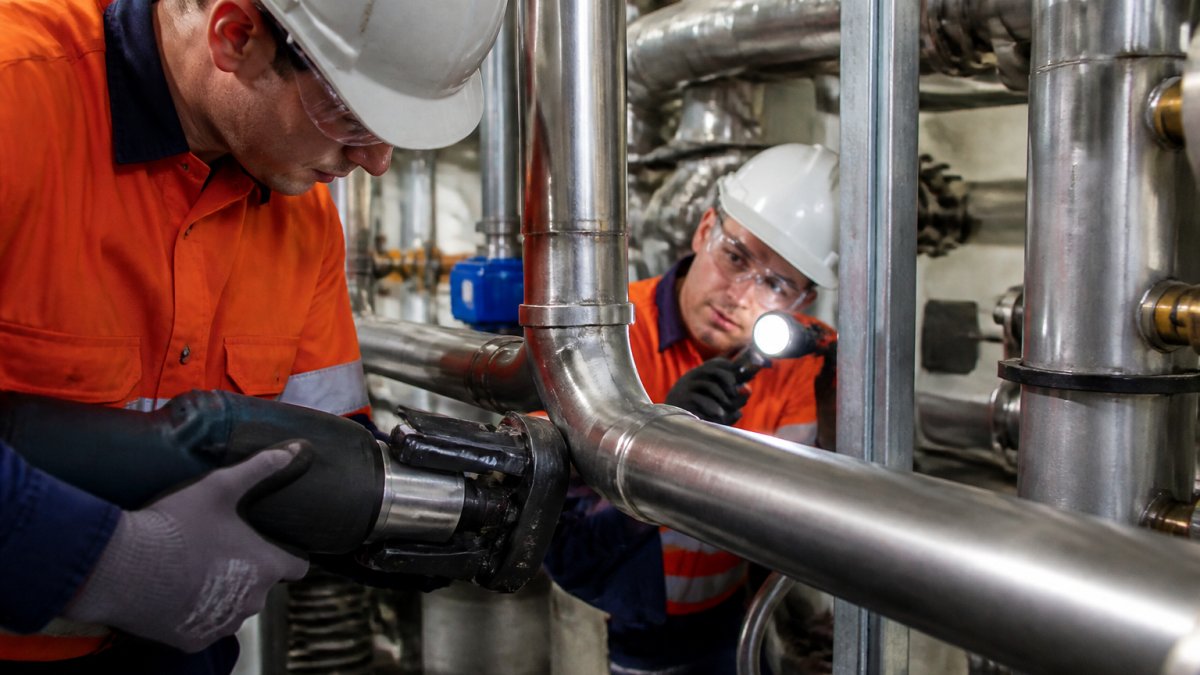
After pressing, inspect the joint visually and check the press mark is complete. Pressure-test the run before closing up walls or ceilings.
If a leak appears, work through the likely causes in order:
- Pipe not inserted to full depth
- Wrong press profile or worn tool jaws
- Damaged O-ring or seal
Cut out and remake a failed press joint rather than re-pressing it.
For contractors pricing this kind of work, Valtech Australia offers trade pricing for plumbers and contractors through a trade account, and can prepare commercial plumbing project quotations where a full schedule of fittings needs to be costed before work begins.
Frequently Asked Questions
How do I know what size hydraulic fitting I need?
Measure the actual outside diameter of the pipe or the thread on the port, not the nominal label on the old part. Hydraulic fitting sizes and thread types are usually stated as a dash size or a thread callout, and a thread gauge or caliper confirms both. Compare the measurement against the manufacturer's size chart before ordering. Guessing from the pipe's nominal bore is the most common cause of wrong-fit returns, so measure twice and match the thread pitch as well as the diameter.
How can I tell whether a hydraulic fitting is JIC or SAE?
JIC and SAE fittings both use a 37-degree flare, so they look similar. The reliable check is the thread: JIC uses a UNF thread, while SAE straight-thread ports use a different thread series and often an O-ring boss seal. Use a thread pitch gauge and compare against a known chart, and check the seat angle with a flare gauge. Never mix the two on a pressure line, because a mismatched thread can tighten partway and fail under load.
What should I check before selecting stainless steel pipe fittings?
Confirm five things: the system's working pressure and any surge peaks, the pipe size and connection type, the fluid and its temperature range, the seal material suited to that fluid, and the environment the fitting sits in. For stainless steel pipe fittings, also check chloride exposure and water quality, because 316L suits many conditions but not every one. Review the manufacturer's technical requirements and, where plumbing compliance applies, confirm WaterMark certification for the specific product.
Can stainless steel fittings be used in every hydraulic application?
No. Stainless steel suits many demanding and corrosive environments, but suitability depends on the fluid, chloride levels, temperature and pressure cycle duty. Some fluids attack particular elastomer seals, and high-chloride conditions can affect even 316L. Assess the application conditions against the manufacturer's technical requirements before specifying. Where the system combines hydraulic and plumbing duties, keep the two connection standards separate and confirm certification for each part of the installation.
Hydraulic work rewards careful specification, and plumbing work rewards a system that installs fast and inspects clean. Valtech Australia supplies 316L stainless steel press-fit pipe and fittings with WaterMark certification under WM 75254 and a 25-year product warranty, so plumbers and contractors can specify with confidence. Register for trade pricing or request a commercial project quotation, and get the right fittings on site.
