

Stainless Steel Pipe System Maintenance Guide
Table of Contents
- What You'll Need Before Starting
- Stainless Steel Pipe Inspection Checklist
- Stainless Steel Pipe Cleaning and Maintenance
- Stainless Steel Pipe Corrosion Prevention
- Stainless Steel Press-Fit System Maintenance
- Common Mistakes to Avoid
- Establishing Your Maintenance Schedule
- Frequently Asked Questions
Last Updated: October 12, 2026
What You'll Need Before Starting
This stainless steel pipe system maintenance guide shows that maintaining a stainless steel pipe system requires only basic tools and materials, most of which plumbers already have on hand.

Essential items include soft cloths, soft-bristled brushes, mild soapy water, and personal protective equipment (gloves, safety glasses, adequate ventilation when using cleaning products). Internal flushing requires access to clean water and compatible flushing solutions.
A maintenance log, a spreadsheet or physical checklist, tracks dates, observations and actions taken. This documented history is valuable if issues arise later and supports warranty compliance.
Having a stainless steel pipe system inspection checklist on hand before you start makes the process systematic and thorough.
Stainless Steel Pipe Inspection Checklist
Regular inspection catches problems early. A structured approach ensures surface issues, joint integrity and potential leaks are identified before they become serious.
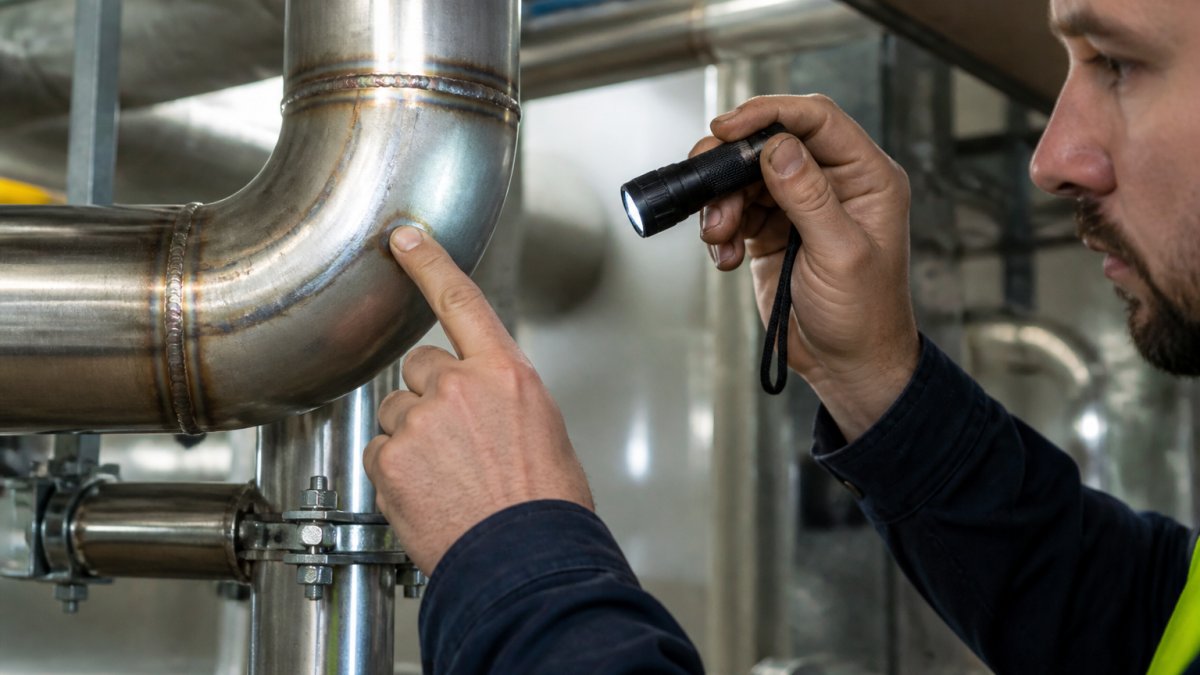
Visual inspection for corrosion and surface damage
Corrosion appears as discolouration, pitting or surface roughness. Inspect the entire visible length of pipe, especially areas where water sits or splashes. Brown or orange staining suggests iron contamination or surface corrosion; white or chalky deposits indicate mineral scale.
Surface damage includes scratches, dents or gouges. Minor installation scratches are normal, but deep gouges expose the underlying material and are more vulnerable to future corrosion, especially in challenging water chemistry environments.
Uniform darkening is often just oxidation, but spotty or localised discolouration suggests contamination or corrosion initiation. Photograph concerning patterns and compare to previous inspections.
Checking welds and joint integrity
Welds and joints are the most common failure points. Inspect every welded area for cracks, pores or incomplete fusion, and run a cloth along the weld bead, it should feel smooth. Rough welds may indicate poor workmanship or hidden defects.
Check press-fit joints for any sign of leaking around the fitting, even a tiny weep means the seal is compromised. Look for discolouration that may suggest water seepage or corrosion at the interface.
Listen for audible leaks. In a quiet space, water escaping from a joint produces a distinct hissing or dripping sound, often the first warning sign before visible moisture appears.
Testing for leaks and pressure integrity
Visual inspection alone doesn't catch internal leaks. Pressure testing during commissioning is standard, but periodic checks confirm the system remains sound: close isolation valves and monitor pressure gauges over time, a pressure drop indicates a leak in the isolated section.
Check for moisture or staining on surfaces below pipes. Inspect ceilings, wall cavities and floors directly beneath the piping system, damp patches or water rings require urgent attention.
For systems under pressure, listen carefully at joints and along pipe runs. Water escaping under pressure creates noise, so use a stethoscope or place an ear near suspect areas to detect leaks others might miss.
Stainless Steel Pipe Cleaning and Maintenance
Cleaning removes contaminants that accelerate corrosion. Maintenance prevents deposits from building up. This stainless steel pipe system maintenance guide explains how together, these practices extend the life of your stainless steel piping system significantly.
Removing surface contamination and residue
Installation residue, adhesive, dust, metal particles and protective coatings, must be removed before the system operates, as these materials trap moisture and create corrosion initiation sites. Start by wiping all external surfaces with a clean, soft cloth.
For stubborn residue, use mild soapy water and a soft-bristled brush, scrubbing gently in the direction of the grain if visible. Rinse thoroughly and dry completely.
Oil and grease require a slightly stronger approach: isopropyl alcohol on a soft cloth. Wipe the area, allow it to air dry, and inspect. For persistent grease, a mild degreaser suitable for stainless steel may be needed, follow product instructions and rinse thoroughly.
Safe cleaning methods and approved products
Mild soapy water, warm water with a small amount of dish soap, is the safest starting point for routine cleaning and removes most surface dirt without risk of damage.
Avoid chlorine-based cleaners, bleach, hydrochloric acid and products containing hypochlorite, these corrode stainless steel and can cause pitting or stress corrosion cracking.
White vinegar diluted 1:1 with water can help with mineral deposits, but test on a small area first, some water chemistries react unpredictably with acidic solutions. Always rinse thoroughly and dry completely after cleaning.
When selecting commercial cleaning products, verify they're safe for stainless steel via the product label or the manufacturer. Valtech Australia can provide guidance on compatible cleaning agents for your specific application and water chemistry.
Internal flushing and chemical cleaning
Internal cleanliness is as important as external appearance. High-velocity flushing during commissioning removes installation debris, and periodic flushing during operation maintains internal cleanliness by removing particles, mineral deposits and scale.
Cold water flushing at high velocity dislodges loose particles. Direct flow through a short section of pipe, capturing the discharge in a bucket. Continue until the water runs clear.
For mineral-heavy water chemistry, periodic chemical cleaning may be necessary. Mild citric acid solutions can dissolve scale, but the process requires care: introduce the solution, circulate for a set time, then flush thoroughly with clean water.
Consult Valtech Australia's technical requirements before using any chemical cleaning solution. Water chemistry varies significantly across Australia, and application conditions determine the best maintenance approach.
Stainless Steel Pipe Corrosion Prevention
Corrosion prevention starts with understanding your water chemistry. Stainless steel resists corrosion far better than copper or steel, but it's not immune under all conditions. Knowing your risks allows targeted prevention.
Understanding corrosion risks in your water chemistry
Chloride content, pH, dissolved oxygen and mineral hardness all influence how aggressively water attacks metal surfaces. High-chloride environments, coastal areas or regions with chlorinated water supplies, present greater risk, as does acidic water (low pH). Soft water with low mineral content can be corrosive to some metals.
316L stainless steel offers superior corrosion resistance compared to standard grades, but application conditions must be assessed. A water analysis from your local supplier provides baseline data, and any chemical treatment or non-standard pH levels are critical for material selection and maintenance planning.
Higher temperatures increase chemical reaction rates and accelerate corrosion, so systems carrying hot water or operating in hot environments require more frequent inspection than cold-water systems.
316L Stainless Steel Pipe 15 x 1.0 x 5800 →
Protecting against chloride exposure
Chloride is the primary enemy of stainless steel, initiating pitting and stress corrosion cracking under certain conditions. In coastal regions or where water is heavily chlorinated, chloride protection becomes essential.
Regular washing with fresh water removes chloride deposits before they penetrate the protective oxide layer. In high-chloride environments, cleaning frequency should increase.
Avoid stagnant water: moving water carries chlorides away, while standing water allows them to concentrate on surfaces. Ensure proper system design with no dead legs or low-flow zones, and drain the system completely during maintenance shutdowns.
If your facility operates in a high-chloride environment or uses heavily chlorinated water, consult Valtech Australia about your specific application. Application conditions should be assessed and Valtech's technical requirements followed.
Stainless Steel Press-Fit System Maintenance
Press-fit technology offers significant advantages over traditional welded or soldered systems, and maintaining press-fit joints properly ensures long-term reliability.
Press-fit joint inspection and monitoring
Press-fit joints create a mechanical seal without heat or solder. The M press profile used by Valtech Australia creates a tight, reliable connection, inspect these joints for any visible weeping or moisture around the fitting body.
A properly executed press-fit joint should be completely dry. If moisture appears, the seal has failed and the joint requires attention.
Monitor joint performance over time. Document any joints showing early signs of issues. Patterns may emerge, for example, joints in certain areas of the building or at specific pressure points, that guide maintenance focus.
Maintenance advantages of press-fit over traditional methods
Press-fit systems eliminate the hot works permits and confined space precautions required by traditional welding, reducing installation complexity and regulatory burden on commercial projects. Maintenance reflects the same advantages: no open flames, no chemical flux residue and simpler troubleshooting.
Installation residue from press-fit work is minimal, no solder drips, flux cleanup or burnt insulation to remove, meaning less contamination to clean during commissioning and fewer corrosion initiation sites long-term.
Press-fit joints are easier to inspect: you can see the entire joint and assess its condition visually. With press-fit, visual inspection and basic pressure testing provide confidence in system integrity.
Common Mistakes to Avoid
Preventable errors damage stainless steel and compromise system reliability. Awareness of these pitfalls helps avoid costly problems.
Using abrasive cleaning tools scratches the protective surface layer. Steel wool, wire brushes, and abrasive pads embed iron particles that initiate rust spots.
Neglecting to dry surfaces after cleaning leaves water that promotes corrosion.
Applying harsh chemicals, bleach, hydrochloric acid, or chlorine-based products, directly damages stainless steel. These create pitting and stress corrosion cracking.
Ignoring early warning signs allows small problems to become large ones. Discolouration, weeping joints, or unusual sounds warrant investigation.
Failing to document maintenance creates gaps in system history. Without records, you can't identify patterns or track whether maintenance schedules are effective.
Assuming stainless steel requires no maintenance is a common misconception.
Establishing Your Maintenance Schedule
A structured maintenance schedule keeps systems performing reliably. Frequency depends on application, water chemistry, and operating conditions.
| Maintenance Task | Frequency | Purpose |
|---|---|---|
| Visual inspection for corrosion and damage | Monthly | Catch surface issues early |
| Check welds and joint integrity | Quarterly | Confirm connections remain sound |
| Clean external surfaces | As needed (typically quarterly) | Remove deposits and contaminants |
| Pressure testing | Annually | Verify system integrity |
| Internal flushing | Annually or as water chemistry requires | Remove sediment and scale |
| Maintenance record review | Quarterly | Identify trends or recurring issues |
Document every maintenance action: date, observations, work performed and results.
Seasonal changes may warrant adjusted schedules.
Valtech Australia offers a 25-year product warranty, subject to the warranty terms, correct installation and appropriate application.
Maintaining a stainless steel pipe system keeps it performing reliably for decades. Regular inspection catches problems early. Proper cleaning removes contaminants that accelerate corrosion.
Valtech Australia's 316L Stainless Steel Press-Fit Pipe & Fittings range is designed for durability in Australian plumbing and commercial applications.
For commercial plumbing projects, plumbers and contractors can access Trade Pricing for Plumbers & Contractors and request Commercial Plumbing Project Quotations to support specification and planning.
Start with a maintenance checklist and schedule. Document your observations. Address issues promptly. Your stainless steel piping system will deliver the long-term performance you expect.
Frequently Asked Questions
How often should stainless steel pipes be inspected?
Inspection frequency depends on system age, water chemistry, and application severity. New commercial installations typically warrant inspection at 6 months post-commissioning, then annually. Systems in high-chloride environments or with aggressive water chemistry should be inspected more frequently. Establish a baseline during the first year to identify early warning signs of corrosion or contamination, then adjust your schedule accordingly. Keep detailed inspection records to track trends over time.
What should you use to clean stainless steel pipes?
Use mild soapy water and soft cloths or soft-bristled brushes for routine surface cleaning. For mineral deposits or scale, warm water with a non-abrasive cleaner works effectively. Never use steel wool, wire brushes, or abrasive cleaners, as these damage the protective surface layer. Avoid chloride-based cleaners and hypochlorite solutions unless specifically approved for your application. Always rinse thoroughly with clean water and dry with a soft cloth. For stubborn residue from installation, consult technical guidance on safe chemical compatibility before proceeding.
Can stainless steel pipework corrode?
Yes, stainless steel can corrode under certain conditions, particularly when exposed to high chloride concentrations or aggressive water chemistry. The 316L grade used in press-fit systems offers superior corrosion resistance compared to lower grades, but it is not immune to all environments. Chloride attack, particularly in coastal or high-salinity water applications, can initiate corrosion if protective measures are not maintained. Application conditions should be assessed carefully, and Valtech's technical requirements should be followed to ensure long-term durability in your specific environment.
What causes corrosion on stainless steel pipes?
Corrosion typically results from chloride exposure, high mineral content in water, or surface contamination that breaches the protective oxide layer. Installation residue, oil, grime, and adhesive deposits can trap moisture and accelerate corrosion if not removed promptly. Poor ventilation in confined spaces can also contribute. Regular cleaning, proper drainage, and maintenance of protective coatings help prevent initiation. Water chemistry assessment and appropriate material selection for your environment are essential, 316L stainless steel offers excellent resistance, but application suitability must be confirmed for your specific conditions.